
Ancient History FAQ
Straight answers, based on archaeology and historical sources.
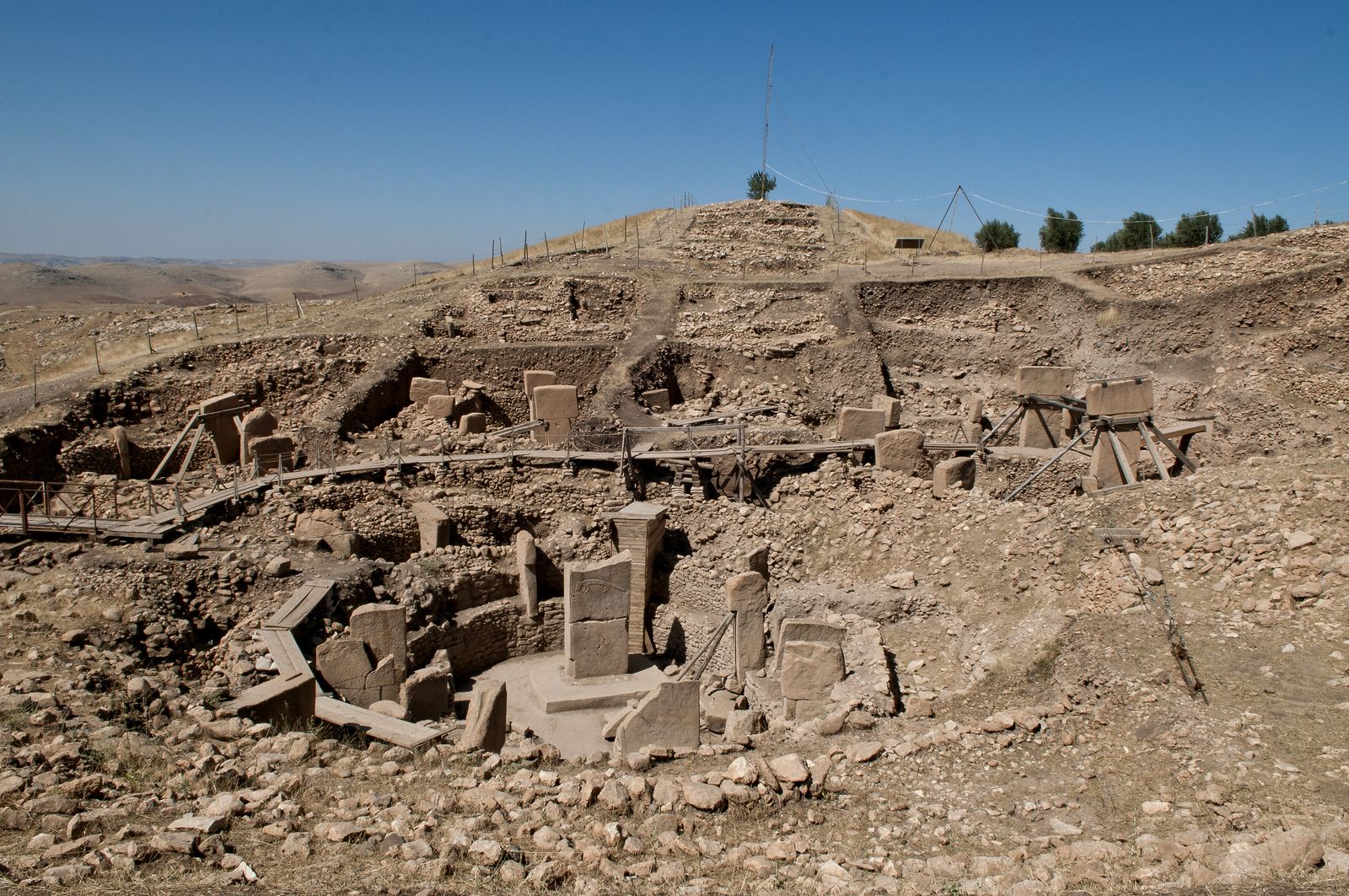
The excavated enclosures of Göbekli Tepe, near Şanlıurfa: Teomancimit, CC BY-SA 3.0
FAQ
Who built the pyramids?
Skilled Egyptian workers and craftsmen, organised in teams, fed and housed in workers' towns. The evidence does not support myths of enslaved masses or outsiders.
What is the oldest writing?
Proto-cuneiform from Uruk in Mesopotamia, about 3400 to 3200 BCE, along with early Egyptian hieroglyphs of a similar age.
Did the Romans have central heating?
Yes, in a sense: the hypocaust circulated hot air under floors and through walls in baths and wealthy homes.
Why has Roman concrete lasted so long?
Volcanic ash and lime clasts allowed it to self-heal small cracks, especially in seawater. See our Roman concrete page.
Which Seven Wonder still stands?
Only the Great Pyramid of Giza.
Does Sudan really have more pyramids than Egypt?
Yes. The Kingdom of Kush built around 200 at Meroe alone, and Sudan has more in total than Egypt.
How were Stonehenge's stones moved?
Most likely on wooden sledges and rails pulled by teams with ropes. The bluestones came from Wales, about 225 km away.
Can anyone read the Indus script?
Not yet. It remains undeciphered.
How were the Nazca Lines made?
By removing dark surface stones to expose lighter ground beneath.
What was the Antikythera mechanism?
A Greek geared device that modelled the movements of the sun, moon and planets and predicted eclipses.
The Ancient Visionary collection
Tees and hoodies in the Ancient Visionary colors, printed to order in the USA. Use code VIP15 from the newsletter for 15% off your first order.





Facts on this page were checked against these sources (updated Oct 12, 2026). Spot an error? Email hello@fireempireshop.com.