The Great Pyramid of Giza
Precision on a colossal scale. The Great Pyramid was built around 2560 BCE with about 2.3 million blocks. How workers built it, its precise alignment and the papyri of Merer.
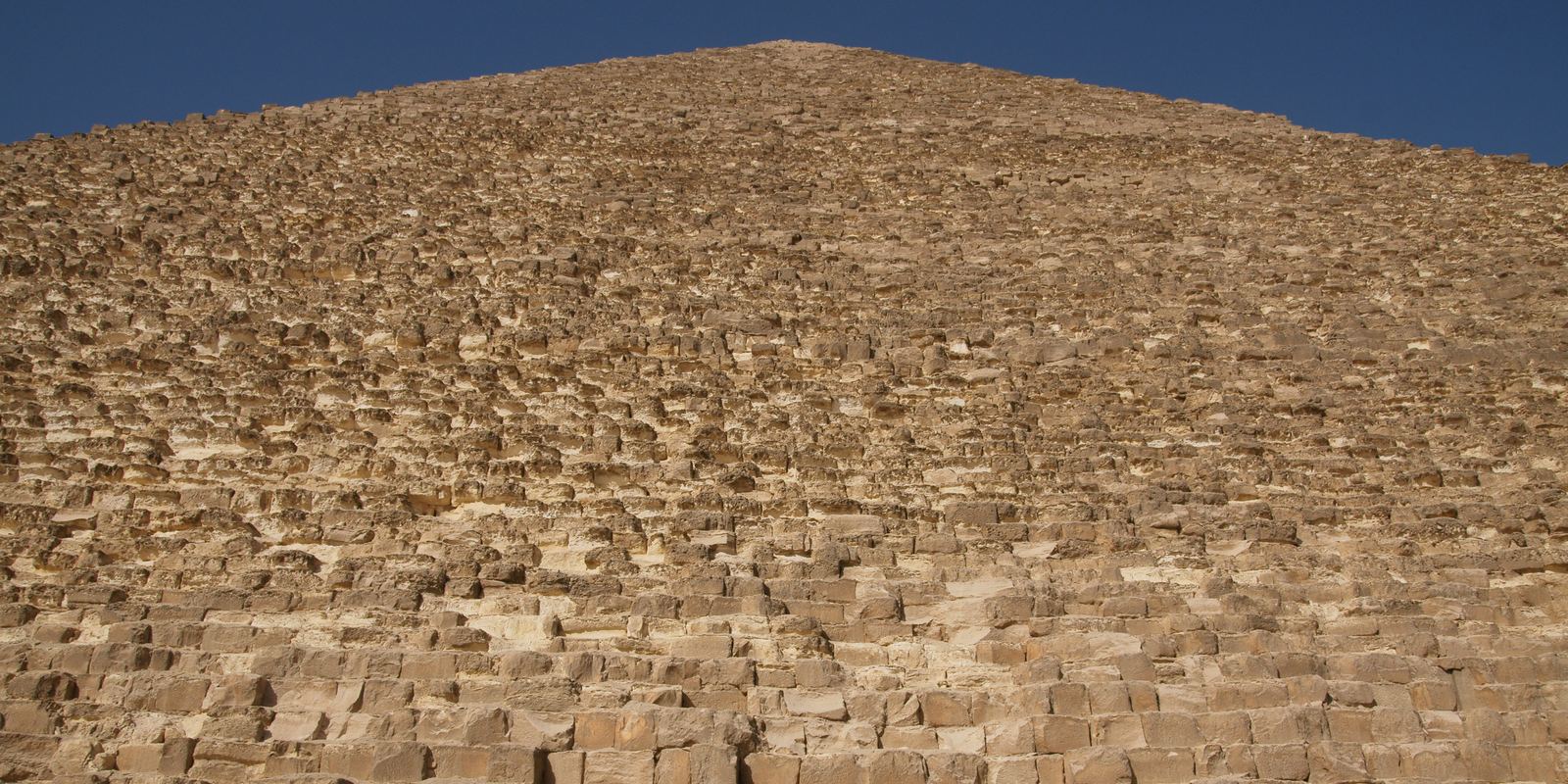
The Great Pyramid's side: kallerna, CC BY-SA 3.0
A record that stood for millennia
The Great Pyramid at Giza, built for the pharaoh Khufu around 2560 BCE, rose about 146 metres and remained the tallest human-made structure on Earth for around 3,800 years. It is the only one of the Seven Wonders of the Ancient World still standing.
Precision
Its square base, about 230 metres on each side, is remarkably level, and the sides face north, south, east and west with only tiny errors. Builders probably used careful observations of the stars or the sun, plus water channels or levelling tools, to achieve this accuracy with copper tools, stone hammers and simple measuring devices.
Who built it
Archaeologists have excavated the workers' town south of the plateau, with bakeries, breweries, sleeping quarters and medical care for injuries. The evidence suggests a skilled, organised and fed workforce, including permanent craftsmen and rotating labour teams, rather than the enslaved crowds of popular myth.
The diary of Merer
In 2013, archaeologists at Wadi al-Jarf on the Red Sea found the oldest known inscribed papyri, logbooks of an official named Merer. They describe his team shipping fine limestone blocks by boat along the Nile and canals from the Tura quarries to Giza, giving a rare first-hand glimpse of the project's logistics.
Engineering lessons
The pyramid is a lesson in project management as much as stonework. Quarrying, transport by river, food supplies, tools, record keeping and housing all had to work together for about two decades. Modern engineers who study it point to the careful planning of the base, the use of local limestone for the core and finer stone for the outer casing, and the organisation of labour teams into named groups that competed and cooperated. The smooth white casing stones that once covered it were mostly removed in later centuries for other buildings, which is why it now looks stepped.
How the blocks went up
Exactly how blocks were raised is still debated. Leading ideas include ramps of mudbrick and rubble, straight, zigzag or wrapping around the pyramid, combined with sledges, wet sand to reduce friction and levers for final placement. Studies of a ramp at an alabaster quarry with post holes suggest a pulley-like system helped haul sledges up steep slopes.
- The Great Pyramid's side: kallerna, CC BY-SA 3.0
Text written by Ancient Visionary.
← The Library of AlexandriaThe Step Pyramid of Djoser and Imhotep →