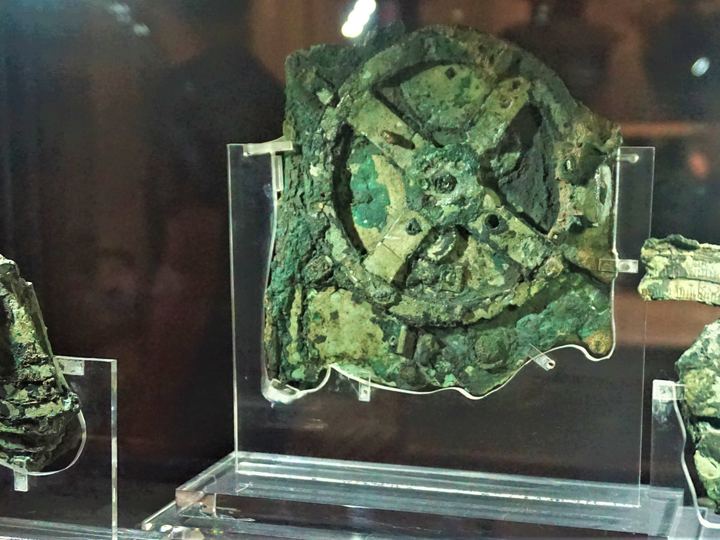
The Maya and the Power of Zero
A shell glyph that held a place. Maya scribes counted in twenties and wrote zero with a shell-like sign, one of the few times in history that people invented zero independently.
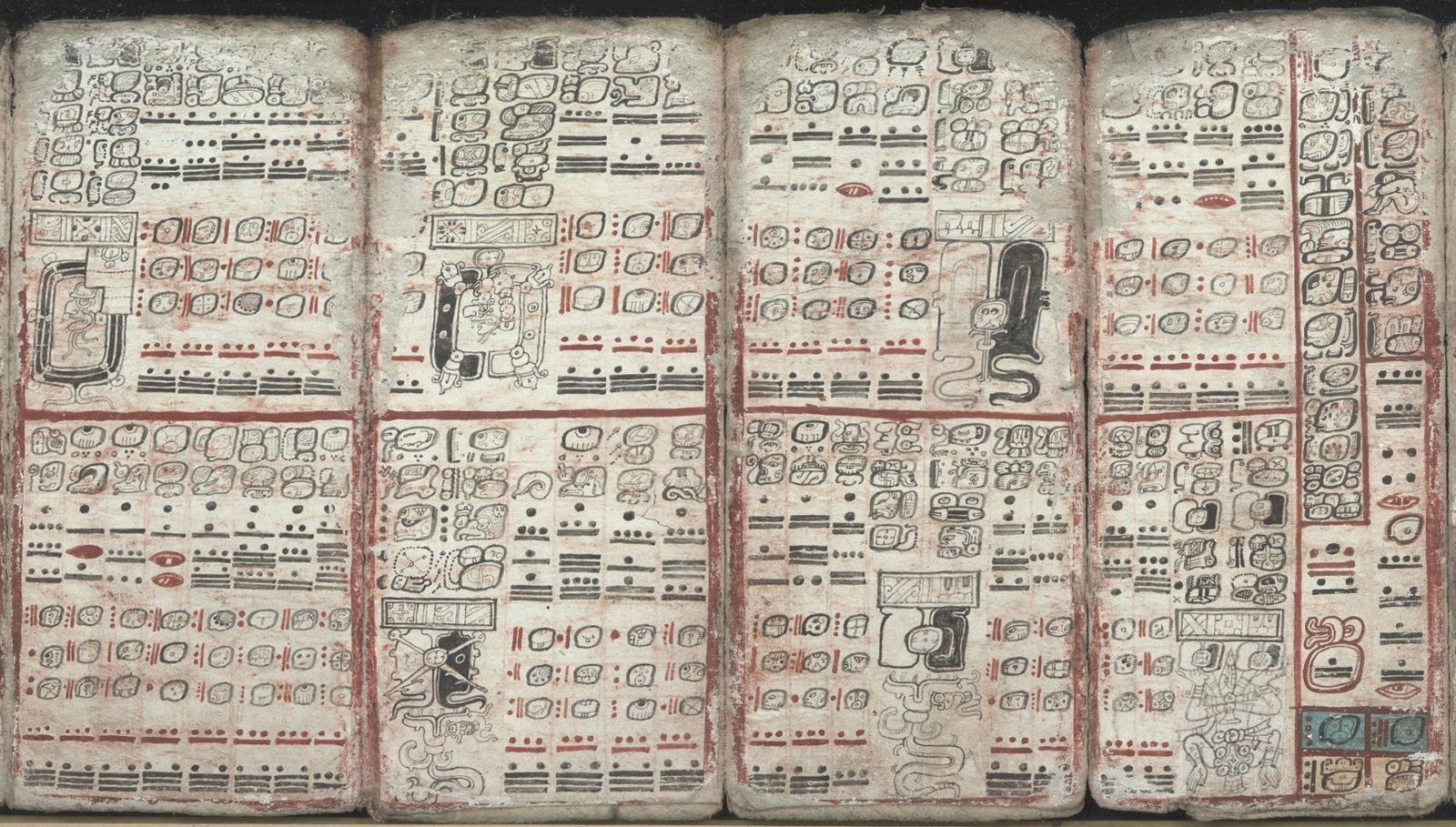
Pages of the Dresden Codex filled with Maya numbers and tables: Unknown Maya scribes (Saxon State and University Library Dresden), Public domain
Counting with dots, bars and a shell
Maya scribes could write any number with just three signs: a dot for one, a bar for five and a shell-like glyph for zero. Thirteen, for example, was three dots sitting above two bars. Instead of counting in tens as we do, they counted in twenties, and larger numbers were stacked vertically, each level worth twenty times the one below.
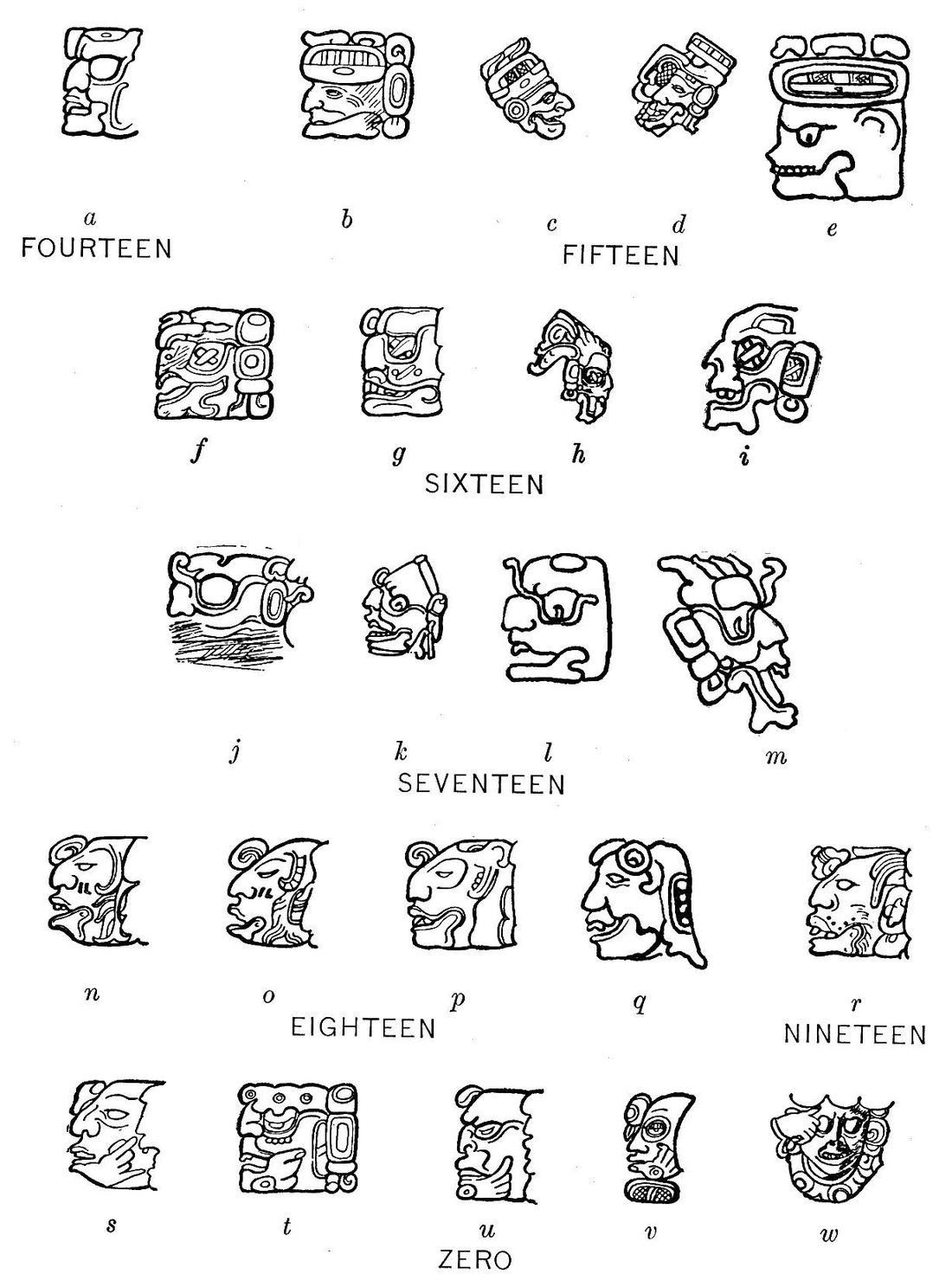
That stacking is the key. In any place-value system you need a way to say that a level is empty. Without it, the numbers 1, 20 and 400 would look the same. The Maya solved this with zero, writing it with the shell sign and with other symbols too, including elaborate head glyphs on carved monuments.
Zero and the Long Count
Zero mattered most in the calendar. The Long Count tallied the days that had passed since a starting point that most scholars place at August 11, 3114 BCE. It used a modified base-20 system: the third position was worth 360 days rather than 400, roughly the length of a year. A date like 9.0.0.0.0, a major milestone in the count, could only be written with zeros holding the empty places.
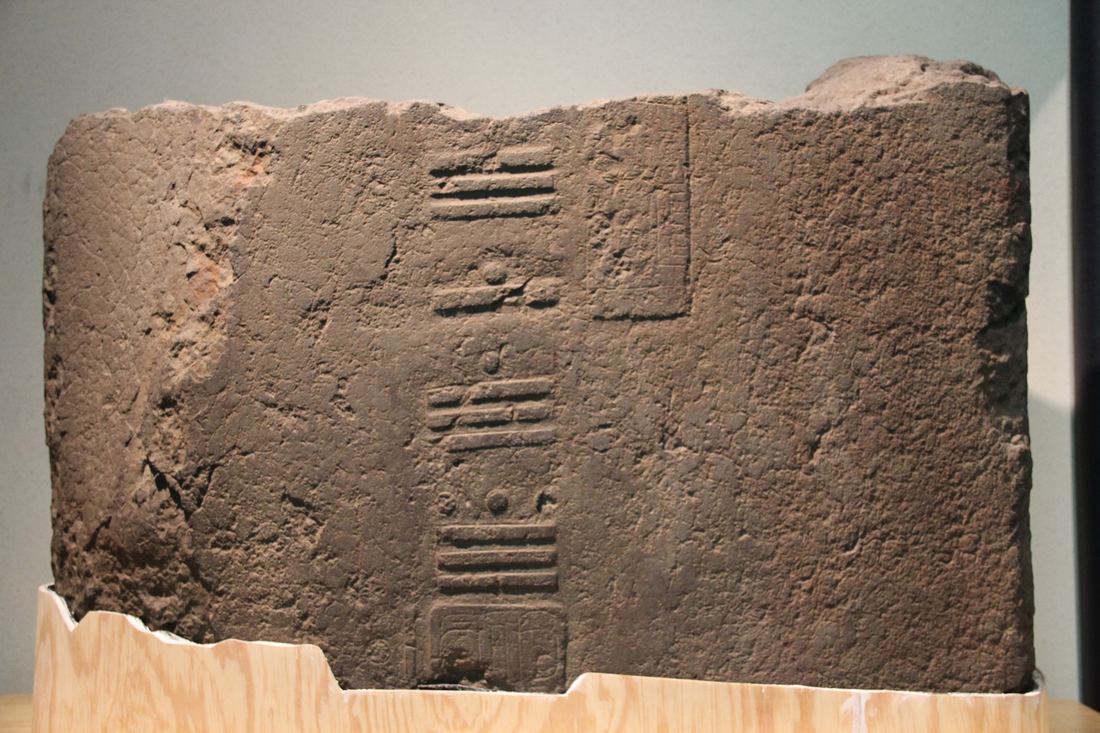
The earliest known Long Count dates, from the first century BCE, were carved at sites on the western edge of the Maya world and beyond, such as Chiapa de Corzo, where one stela carries a date in 36 BCE, and Tres Zapotes. That suggests the system and its placeholder were shared across several Mesoamerican peoples before the Maya made them famous.
How it compares
Zero was invented independently only a few times. In Mesopotamia, Babylonian scribes using base 60 began marking empty places with a special sign by around 300 BCE, but they never used it alone or at the end of a number, so it was a placeholder rather than a true zero. Greek astronomers, including Ptolemy around 150 CE, used a zero symbol in their tables.
In India, mathematicians went further and treated zero as a number you could calculate with. Brahmagupta set out rules for it in the seventh century CE, and a small circle for zero appears in a temple inscription at Gwalior dated 876 CE. That Indian zero, carried west by scholars of the Islamic world, became the digit we use today. The Maya zero grew up entirely separately.
A living legacy
Maya astronomers used their numbers to track the Moon, Venus and eclipses with impressive precision, as seen in the tables of the Dresden Codex, one of only a handful of Maya books to survive. Today millions of Maya people live in Mexico and Central America, and some communities still keep the traditional 260-day calendar. The humble shell glyph is a reminder that brilliant ideas can bloom in more than one place.
- Pages of the Dresden Codex filled with Maya numbers and tables: Unknown Maya scribes (Saxon State and University Library Dresden), Public domain
- Tres Zapotes Stela C, carved with one of the earliest Long Count dates: Gary Todd, CC0
- Head-variant Maya numerals, including zero, drawn by Sylvanus Morley: Sylvanus Griswold Morley, Public domain
Text written by Ancient Visionary.
← Eratosthenes Measures the EarthThe Library of Alexandria →