Cuneiform: The First Writing
Wedges in clay from ancient Iraq. Cuneiform began in Mesopotamia around 3400 BCE for keeping accounts. How reed styluses and clay tablets created one of the first writing systems.
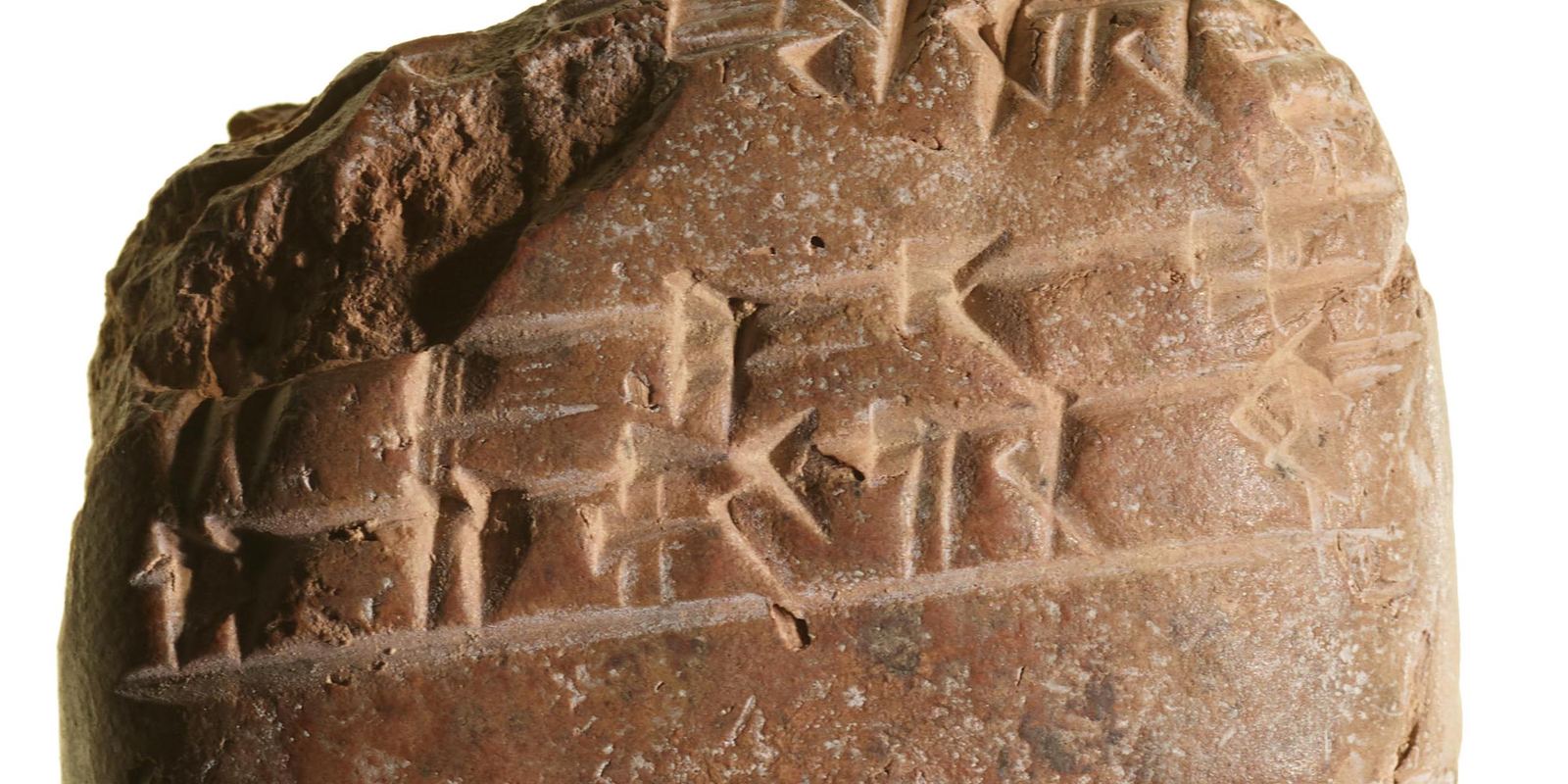
A cuneiform clay tablet: Original author unknown. Translation help provided by Manuel Molina., Public domain
Counting before writing
In the cities of Sumer, in what is now southern Iraq, officials needed to track grain, livestock and labour. Around 3400 to 3200 BCE, at the city of Uruk, scribes began pressing signs into clay tablets to record quantities and goods. These proto-cuneiform tablets are among the earliest writing in the world.
Wedges in clay
Scribes used a cut reed to press marks into soft clay, leaving wedge-shaped impressions, which is why the script is called cuneiform, from the Latin for wedge. Over time, picture-like signs became abstract groups of wedges representing words and sounds. Tablets could be dried in the sun or baked hard.
Many languages, many uses
Cuneiform was adapted for Sumerian, Akkadian, Hittite and other languages and used for about 3,000 years. People wrote contracts, letters, school exercises, maths problems, medical texts, recipes and literature, including the Epic of Gilgamesh, one of the oldest surviving stories.
Schools and scribes
Training as a scribe took years in schools sometimes called tablet houses. Students copied sign lists and proverbs, and some of their practice tablets, with mistakes, survive. Mesopotamian mathematics used a base-60 system, which is why we still have 60 minutes in an hour and 360 degrees in a circle.
Engineering lessons
Clay turned out to be a brilliant storage medium. When cities burned, clay tablets in archives were often baked hard rather than destroyed, preserving records for thousands of years. That is why we know so much about Mesopotamian business, law and daily life, including complaints about poor-quality copper from an unhappy customer around 1750 BCE, sometimes called the world's oldest customer complaint, now in the British Museum.
Deciphering it
Cuneiform fell out of use around the start of the common era and was forgotten until scholars deciphered it in the 1800s. Museums around the world hold hundreds of thousands of tablets, and many have still not been translated.
- A cuneiform clay tablet: Original author unknown. Translation help provided by Manuel Molina., Public domain
Text written by Ancient Visionary.