The Archimedes Screw
A water lifter still turning today. The Archimedes screw lifts water with a turning helix inside a tube. Its ancient origins, how it works and its modern uses from pumps to turbines.
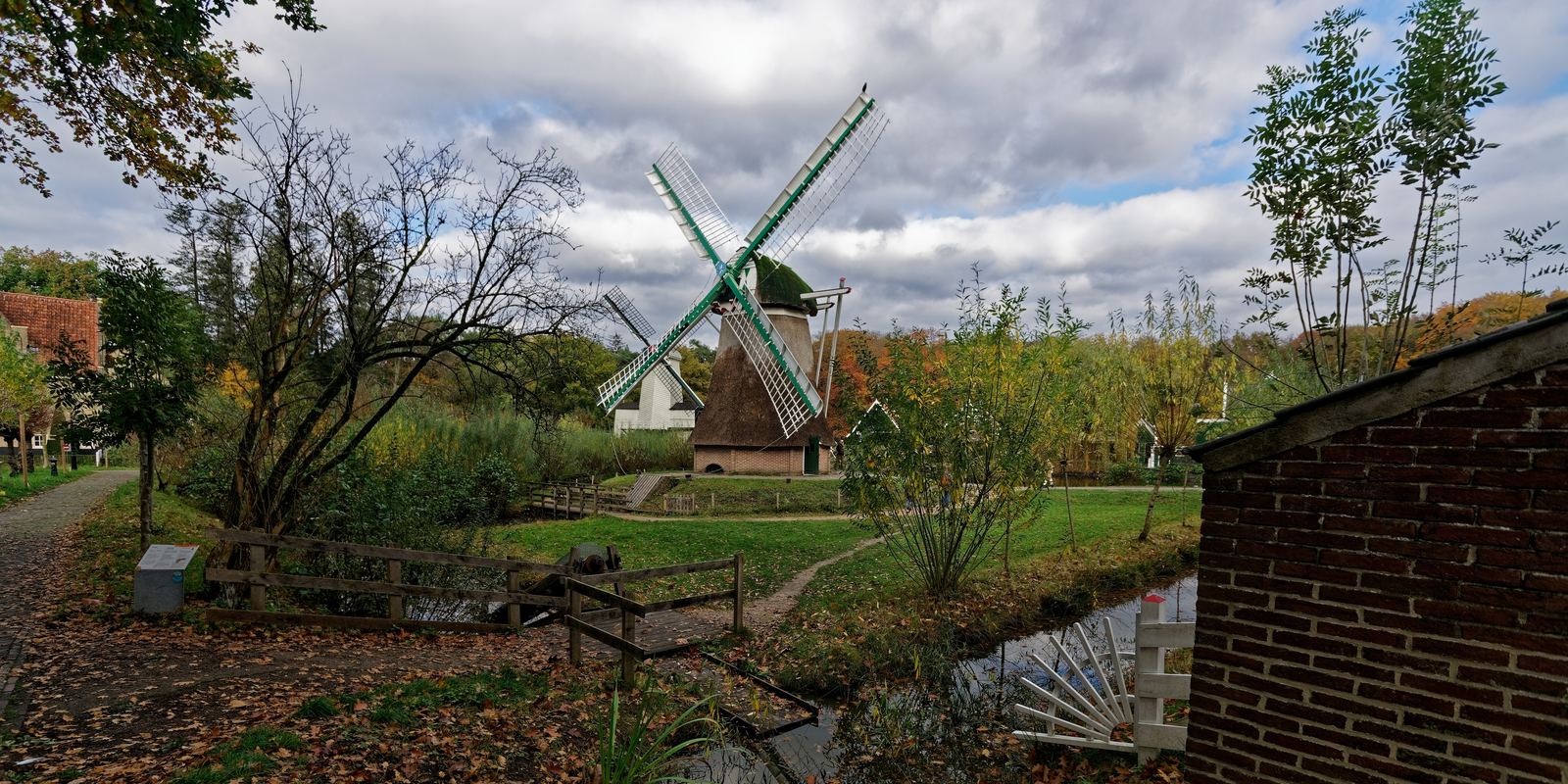
An Archimedes screw, Netherlands Open Air Museum: Txllxt TxllxT, CC BY-SA 4.0
Archimedes
Archimedes of Syracuse, who lived about 287 to 212 BCE, was one of the greatest mathematicians and engineers of the ancient world. He worked on geometry, levers, buoyancy and the calculation of pi. The water-lifting screw is named after him, though some historians think similar devices may have existed earlier in the Near East.
How it works
The device is a helix, like a large corkscrew, set inside a tube or trough and tilted with its lower end in water. As the screw turns, each pocket of water between the blades is carried upward, spilling out at the top. A person, an animal or later a windmill or engine supplies the turning power.
Ancient uses
The screw was used to irrigate fields in Egypt, to drain water from mines in the Roman world and to pump water out of ships. It was simple, reliable and could move large volumes of water a short height, perfect for farming along rivers.
Still turning
Today large Archimedes screws pump wastewater in treatment plants and drain low land in the Netherlands. Run in reverse, they act as slow-turning hydropower turbines at weirs, generating electricity while letting fish pass through more safely than many other turbines. Screw conveyors in factories move grain, plastic pellets and more using the same principle.
Engineering lessons
The screw's efficiency depends on its angle, the number of blades and how fast it turns. Too steep, and water spills back; too shallow, and it lifts water only a little way. Ancient engineers found practical answers by trial and error, and Roman writer Vitruvius described how to build one in detail. Modern engineers use computer models to design screw pumps and turbines, but the core idea is unchanged after more than two thousand years.
Did you know?
Archimedes is also famous for the story of shouting eureka in the bath after realising how to measure the volume of an irregular object, though that tale was written down long after his lifetime.
- An Archimedes screw, Netherlands Open Air Museum: Txllxt TxllxT, CC BY-SA 4.0
Text written by Ancient Visionary.