
The Antikythera Mechanism
A bronze computer from an ancient shipwreck. Pulled from a Greek shipwreck in 1901, this hand-turned bronze gearbox tracked the Sun, Moon, eclipses and even the dates of the ancient games.
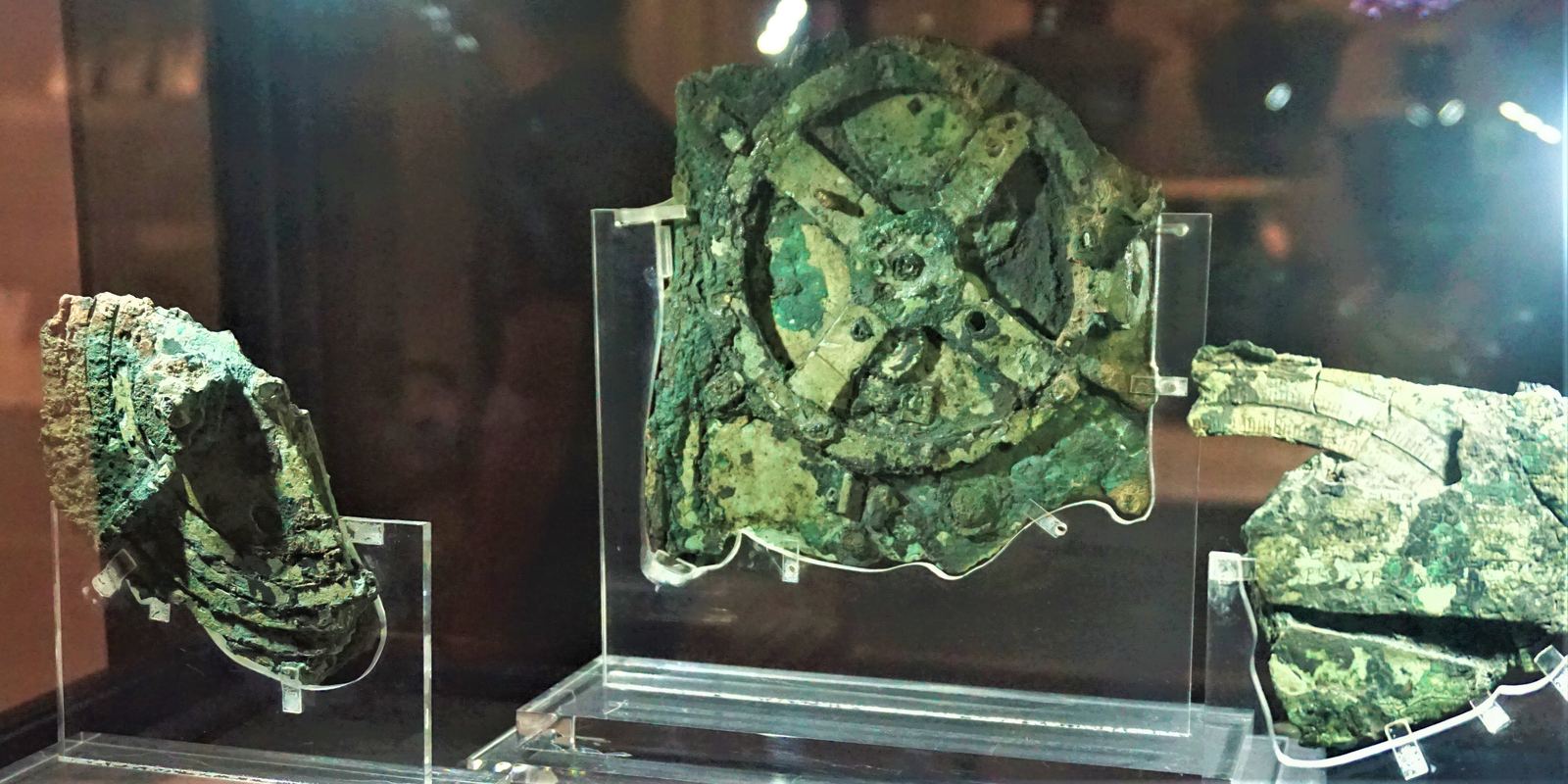
Fragments of the Antikythera mechanism in Athens: Joyofmuseums, CC BY-SA 4.0
A lump of bronze from the seabed
Around 1900, sponge divers from the island of Symi found an ancient shipwreck about 45 meters down off the small Greek island of Antikythera. Over the following months they hauled up bronze and marble statues, glassware and pottery. Among the finds was a shapeless, corroded lump that nobody paid much attention to.
In May 1902 the archaeologist Valerios Stais noticed something strange in one of the broken pieces: a gearwheel. That was a shock. Nothing from the ancient world was supposed to contain precision gearing like this. The wreck itself dates to roughly 70 to 60 BCE, and the device is usually placed somewhere in the 2nd century BCE.
Video: Antikythera Mechanism Part 1: by Nature Video (nature video), embedded from YouTube.
A sky in a shoebox
Reconstructed, the mechanism sat in a wooden case about the size of a shoebox. Turn a handle and dozens of interlocking bronze gears moved pointers across dials on the front and back. The front showed the positions of the Sun and Moon against the zodiac and a calendar, plus a little rotating ball, half light and half dark, that displayed the phase of the Moon.
The back dials tracked long astronomical cycles. A spiral dial followed the 19-year Metonic cycle, which lines up lunar months with solar years. Another tracked the Saros cycle of 223 lunar months, used to predict when eclipses would return. A small dial even counted down the four-year cycle of the great Greek athletic games, including the Olympics.
Gears that copy the Moon's wobble
The cleverest trick is how it handles the Moon. The Moon does not move across the sky at a steady speed, so the builders mounted two gears on slightly offset axes and linked them with a pin running in a slot. As the gears turn, the pointer speeds up and slows down, mimicking the real Moon. Engineers would not see gearing this sophisticated again for well over a thousand years.
Reading the hidden text
Since the 1950s, scholars such as Derek de Solla Price have tried to work out how it all fitted together. In 2005 a team led by Cardiff University used X-ray computed tomography to look inside the fragments, revealing hidden gear teeth and thousands of tiny inscribed letters that work almost like a user manual. Later studies found references to planetary cycles for Venus and Saturn, and in 2021 a University College London team proposed a full model of the front, complete with planets.
Today the fragments rest in the National Archaeological Museum in Athens. Small, green and broken, they still prove that ancient Greek makers could turn astronomy into a machine you could hold in your hands.
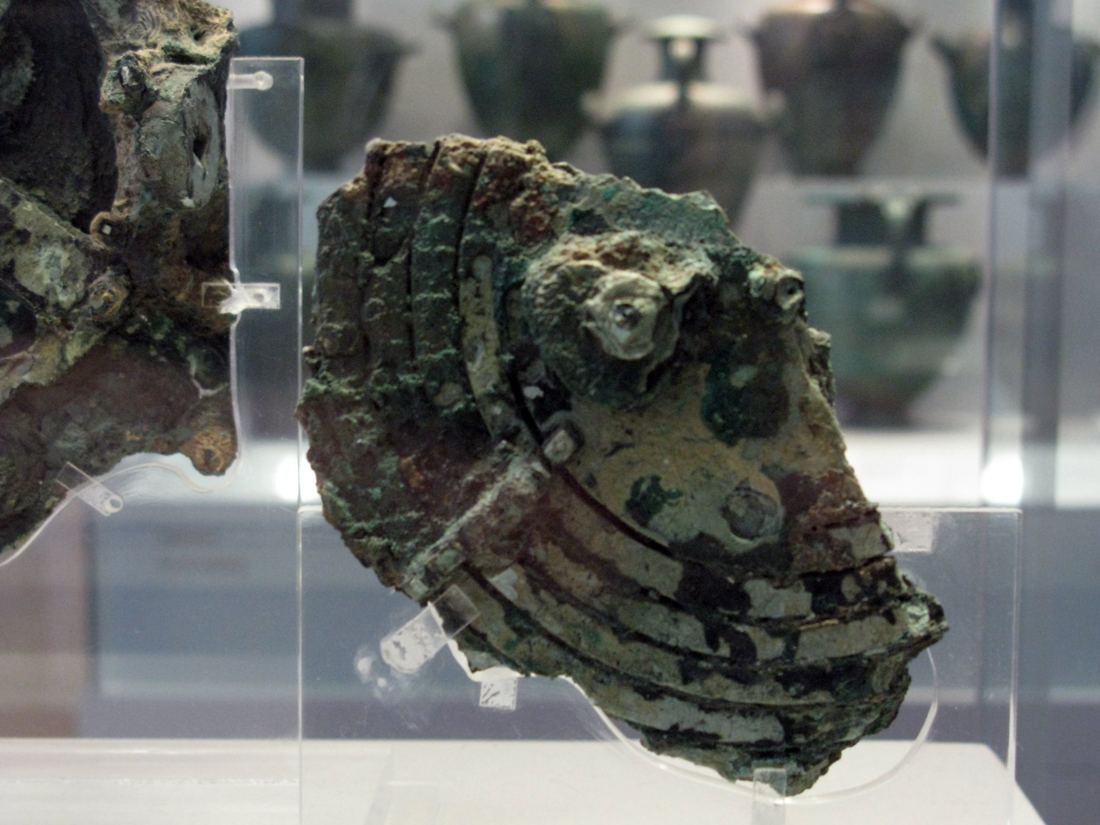
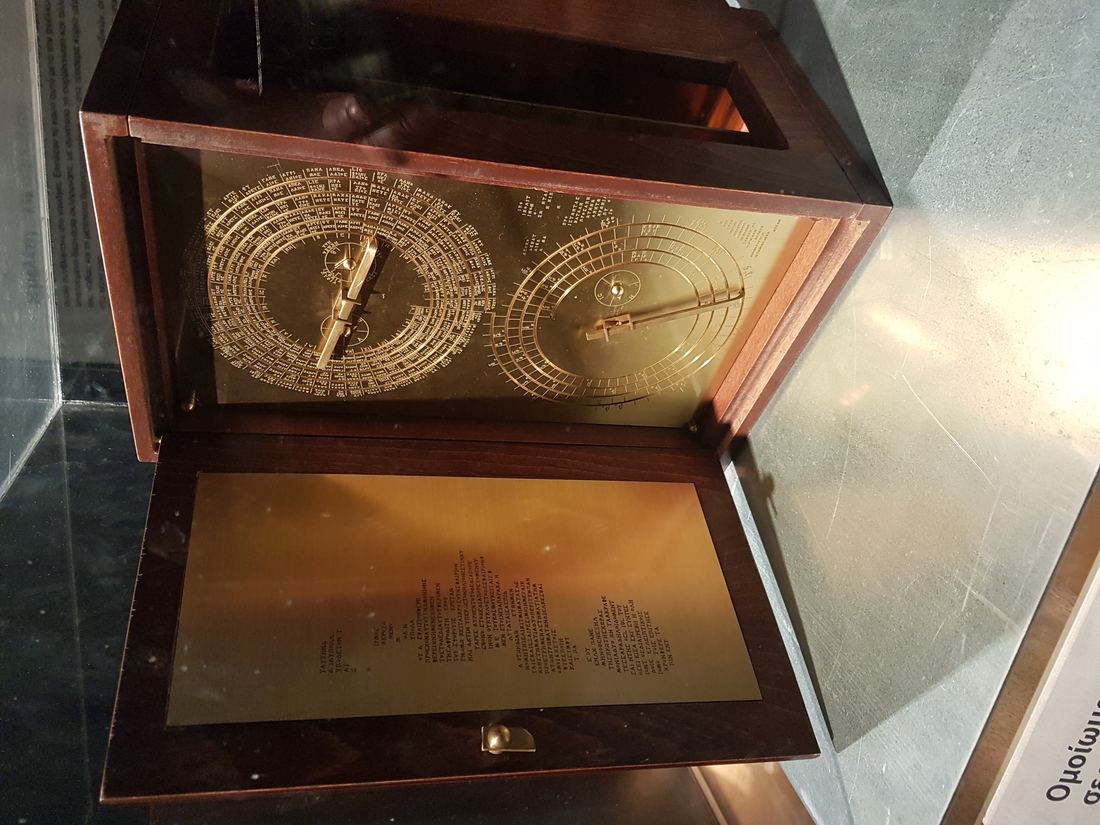
- Fragments of the Antikythera mechanism in Athens: Joyofmuseums, CC BY-SA 4.0
- A surviving fragment up close: Tilemahos Efthimiadis, CC BY 2.0
- A modern working model of the mechanism: Gts-tg, CC BY-SA 4.0
Text written by Ancient Visionary.
← The Library of AlexandriaHero's Aeolipile: The First Steam Engine →


.jpg)
.jpg)