The Silk Road
Trade routes that connected continents. The Silk Road was a web of trade routes linking China, Central Asia, the Middle East and Europe. Its goods, caravanserais, inventions and ideas.
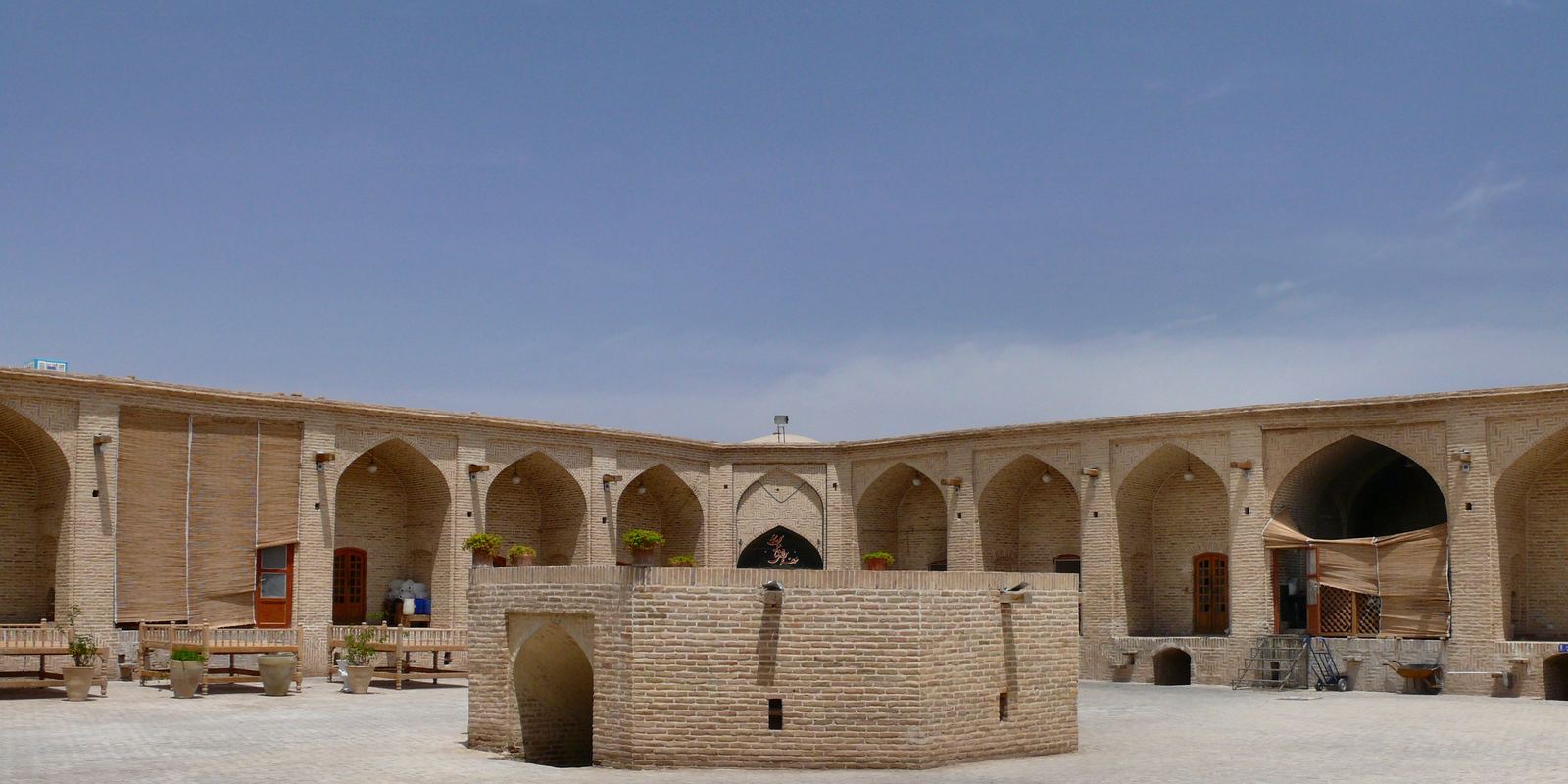
A Silk Road caravanserai, Meybod: dynamosquito from France, CC BY-SA 2.0
Not one road
The Silk Road was not a single road but a network of overland and sea routes connecting China with Central Asia, India, the Middle East, East Africa and Europe. It grew from around the 2nd century BCE, when the Han dynasty opened routes to the west. The name was coined much later, in 1877, by the German geographer Ferdinand von Richthofen.
What travelled
Chinese silk was so prized in Rome that it gave the routes their name, but traders also carried spices, tea, porcelain, glass, horses, cotton, gems and metals. Most merchants travelled only one section, passing goods along a chain of markets.
Caravanserais
Along desert routes, caravanserais offered secure courtyards where travellers and their camels could rest, trade and find water. Many survive in Iran, Turkey and Central Asia, some restored as hotels and museums.
Ideas on the move
Inventions and knowledge travelled too. Papermaking spread from China westward, reaching the Middle East by the 8th century. Crops, music, art styles, medicine and mathematics moved in both directions, linking cultures across thousands of kilometres.
Engineering lessons
Moving goods across deserts and mountains required careful planning: caravans of camels could carry heavy loads and survive long stretches without water, and traders timed journeys around seasons. Market cities grew rich as meeting points, with bankers, translators and craftsmen serving travellers. Coins from many cultures have been found along the routes, showing how money, like ideas, crossed borders.
Heritage
In 2014 UNESCO listed the Chang'an-Tianshan corridor, a network of sites across China, Kazakhstan and Kyrgyzstan, as a World Heritage Site. Cities such as Samarkand and Bukhara in Uzbekistan still show the wealth that trade brought.
- A Silk Road caravanserai, Meybod: dynamosquito from France, CC BY-SA 2.0
Text written by Ancient Visionary.