Great Zimbabwe
Houses of stone. Great Zimbabwe was a stone city and trading capital from the 11th to 15th centuries, built with mortar-free granite walls. Its trade and legacy.
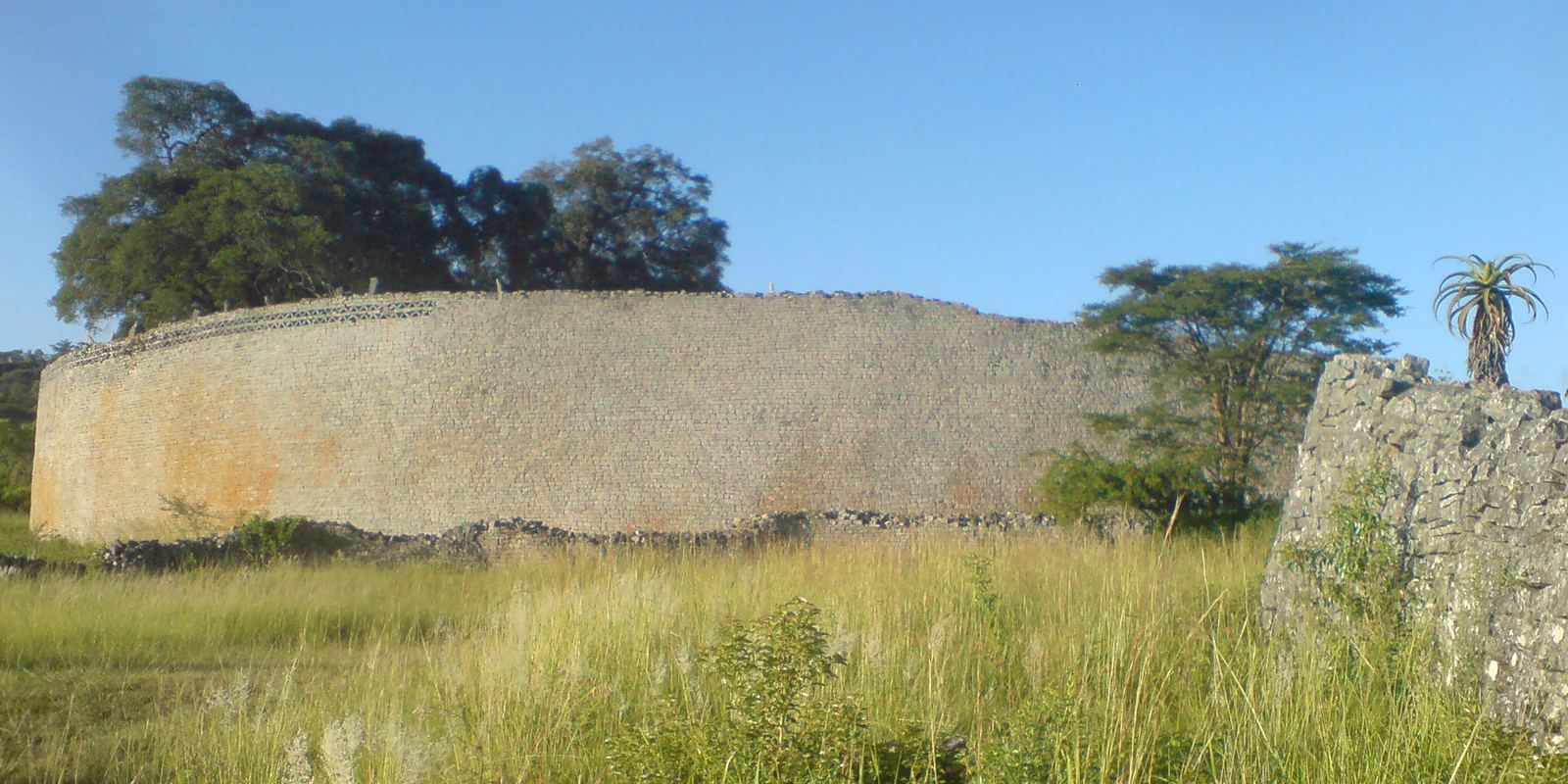
The Great Enclosure wall, Great Zimbabwe: Jens Klinzing, CC BY 3.0
A city of stone
Great Zimbabwe, in the southeast of present-day Zimbabwe, was the capital of a powerful trading state between about the 11th and 15th centuries. At its height, thousands of people lived there. Its builders shaped local granite into blocks and stacked them without mortar into walls that still stand.
The Great Enclosure
The largest structure, the Great Enclosure, has an outer wall about 250 metres around and up to about 11 metres high, with a famous conical tower inside. Decorative chevron patterns run along the top of parts of the wall. Other structures sit on a hill above and in the valley between.
A trading hub
Great Zimbabwe controlled routes for gold and ivory heading to the Swahili coast of the Indian Ocean. Archaeologists have found glass beads from India, Chinese porcelain and Persian pottery at the site, showing connections across a vast trade network.
Legacy
The site gave its name to the country of Zimbabwe, from a Shona phrase meaning houses of stone. Carved soapstone birds found there became national symbols. It was listed as a UNESCO World Heritage Site in 1986.
Engineering lessons
The builders adapted to local granite, which naturally splits into slabs as rock surfaces heat and cool. Workers may have used fire and water to speed up this splitting, then shaped blocks with hammerstones. The walls lean slightly inward for stability and were built without foundations in some places, yet they have stood for centuries, a testament to careful dry-stone technique still admired by masons today.
Visiting
The site is near the town of Masvingo, with a museum displaying finds. Walking the narrow passage inside the Great Enclosure gives a sense of the builders' skill and scale.
- The Great Enclosure wall, Great Zimbabwe: Jens Klinzing, CC BY 3.0
Text written by Ancient Visionary.