The Nazca Lines
Giant drawings in the desert. The Nazca Lines are giant figures scratched into Peru's desert about 2,000 years ago. How they were made, why they survived and new discoveries.
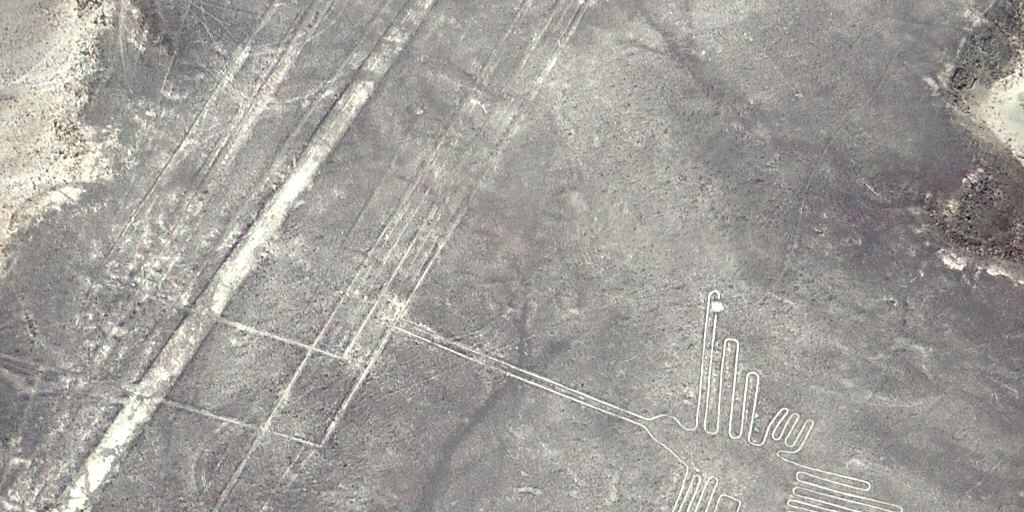
The Nazca hummingbird: Unukorno, CC BY 3.0
Drawings on a giant scale
In the desert plains of southern Peru, the Nazca people created hundreds of lines, geometric shapes and figures of animals and plants. Some are hundreds of metres long; the hummingbird is about 90 metres. They are best seen from the air or nearby hills.
How they were made
The desert surface is covered with reddish stones darkened by oxidation. By removing these stones and piling them along the edges, makers exposed the lighter ground beneath, creating lines. Experiments have shown that small teams using stakes and string could lay out large figures accurately.
Why they survived
The region is one of the driest on Earth, with little wind at ground level and almost no rain, so the lines have lasted about 2,000 years. Today they are protected, and walking on them is forbidden.
What were they for?
Their purpose is still debated. Researchers have suggested they marked paths walked by groups, related to water sources in this dry land, or had calendar or ceremonial meanings. German mathematician Maria Reiche studied and protected them for decades in the 20th century.
Engineering lessons
The Nazca also built underground aqueducts called puquios, spiralling stone-lined openings that let air in and helped move groundwater, some of which still supply water to fields today. Together with the lines, these works show a society skilled in surveying and water management in one of the harshest environments on Earth. Researchers continue to map the area with drones and satellite images to protect it from damage by roads and vehicles.
New discoveries
New figures are still being found. In 2024 researchers working with artificial intelligence and drone surveys announced hundreds of newly identified smaller figures, showing how much remains to learn.
- The Nazca hummingbird: Unukorno, CC BY 3.0
Text written by Ancient Visionary.