Mohenjo-daro
A planned city with drains, 4,500 years ago. Mohenjo-daro, a city of the Indus civilisation, had grid streets, brick houses with bathrooms and covered drains around 2500 BCE.
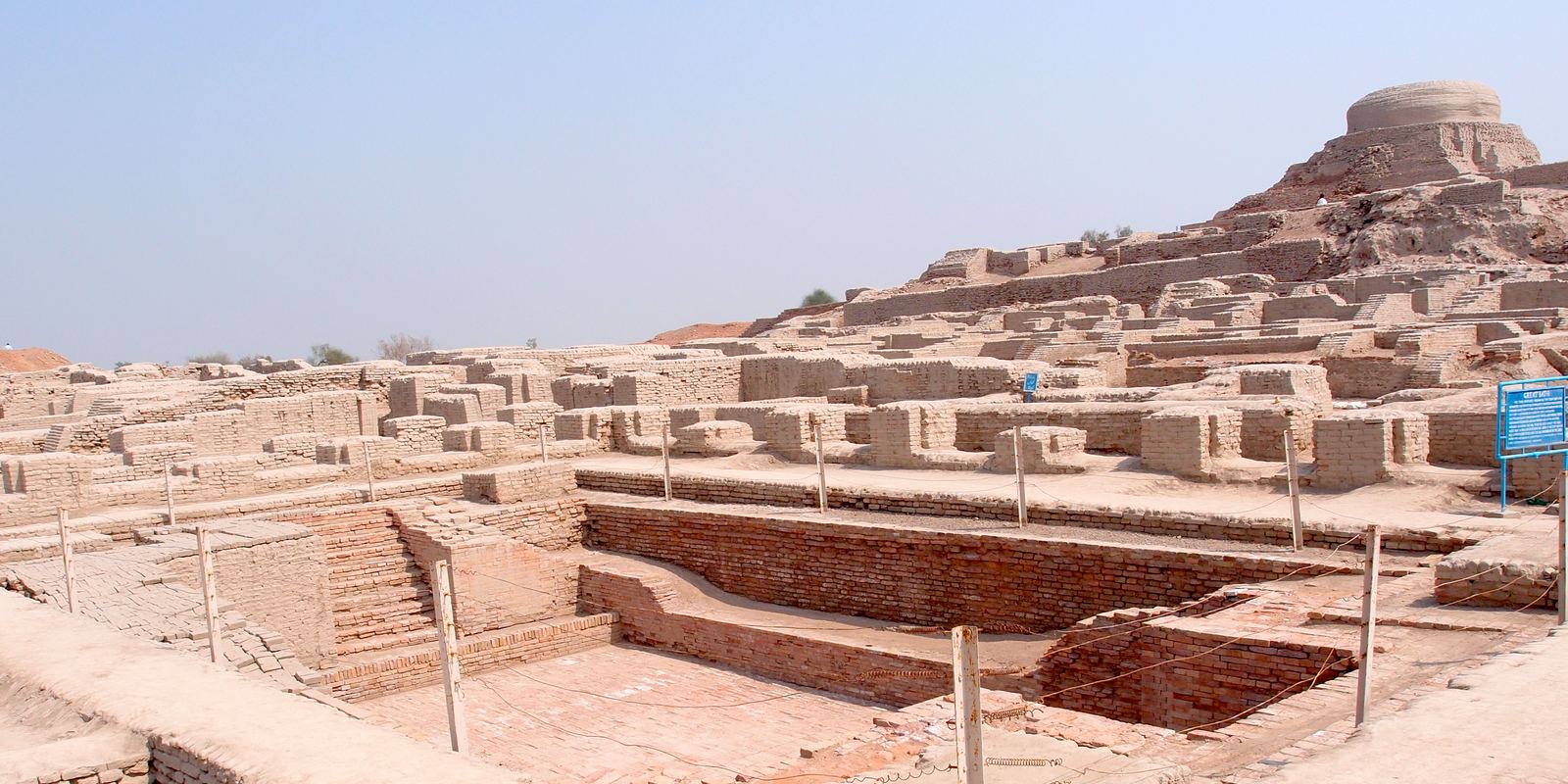
Mohenjo-daro's brick streets: Saqib Qayyum, CC BY-SA 3.0
A city ahead of its time
Mohenjo-daro was one of the largest cities of the Indus civilisation, which spread across what is now Pakistan and northwest India. Around 2500 BCE, it may have housed tens of thousands of people. Its streets were laid out in a grid, and its buildings were made of standardised baked bricks.
Plumbing and sanitation
Many houses had private bathing areas and toilets connected to covered drains running along the streets, with inspection holes for cleaning. Wells supplied water across the city. This level of urban sanitation was remarkable for its time and is one of the reasons the Indus cities fascinate engineers.
The Great Bath
On a raised area called the citadel stands the Great Bath, a large brick pool waterproofed with bitumen, surrounded by rooms and a colonnade. Archaeologists still debate exactly what it was used for. Nearby is a large building often interpreted as a granary or hall.
An unread script
The Indus people used a script found on seals, pottery and tablets, but it has not been deciphered, so much about their society remains a mystery. Seals carved with animals and signs were probably used in trade, which reached as far as Mesopotamia.
Engineering lessons
Indus cities used standardised weights and bricks with consistent proportions across hundreds of kilometres, suggesting shared rules for trade and building. Sewage and rainwater were carried away from homes, and some drains had soak pits to catch solids, an early form of waste management. Engineers today still point to these systems as an example of how planning, maintenance and public health go together in cities.
Protecting the site
Mohenjo-daro was rediscovered in the 1920s and became a UNESCO World Heritage Site in 1980. Salt from groundwater and weather damage threaten its fragile bricks, and conservation work continues.
- Mohenjo-daro's brick streets: Saqib Qayyum, CC BY-SA 3.0
Text written by Ancient Visionary.