Ancient Glassmaking
From beads to blown glass. Glass was first made in Mesopotamia and Egypt as beads and small vessels; glassblowing, invented around the 1st century BCE, made it everyday.
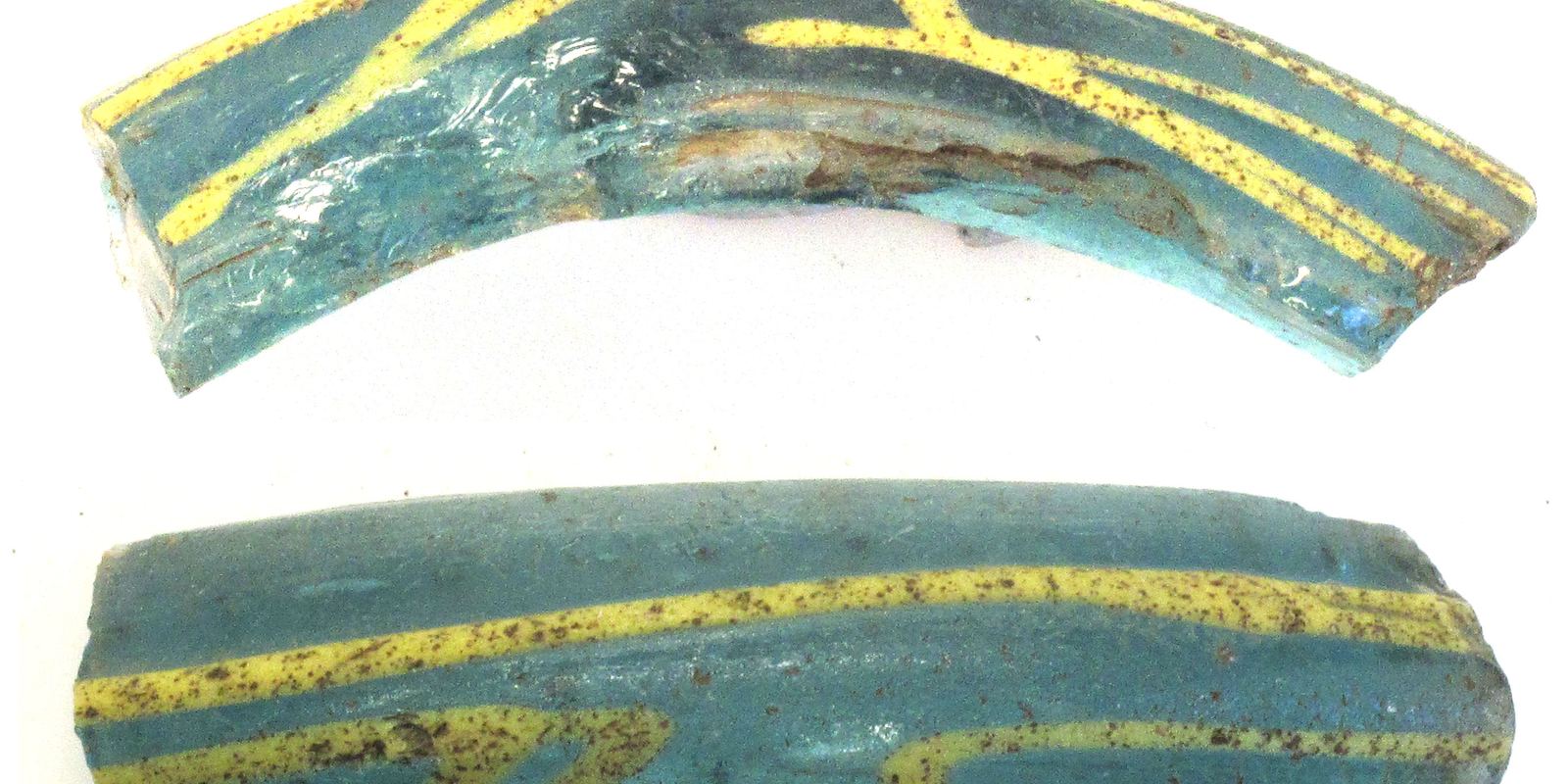
A Roman glass vessel: The Portable Antiquities Scheme, Robert Collins, 2012-02-02 13:31:05, CC BY-SA 4.0
The first glass
Glass is made by heating sand with a flux such as soda to lower its melting point, plus lime for stability. The earliest glass objects, mainly beads, appear in Mesopotamia in the third millennium BCE. By about 1500 BCE, craftspeople in Egypt and Mesopotamia made small colourful vessels for perfumes and oils.
Core-forming
Early vessels were made by winding hot glass around a core of clay and dung on a rod, then decorating them with trails of coloured glass dragged into zigzags. After cooling, the core was scraped out. These were luxury items.
The blowing revolution
Around the 1st century BCE, glassworkers on the eastern Mediterranean coast discovered they could inflate a gob of molten glass on the end of a hollow pipe. Glassblowing was fast and cheap, and under the Romans glass cups, bottles and jars became everyday objects across the empire. Window glass also appeared in Roman buildings.
A Roman masterpiece
The Lycurgus Cup, made in the 4th century CE and now in the British Museum, looks green in reflected light and red when lit from inside. Scientists found it contains tiny nanoparticles of gold and silver, an early, probably accidental, use of nanotechnology.
Engineering lessons
Ancient glassmakers worked by eye and experience, controlling furnace temperatures with fuel and airflow. Colours came from metal compounds: cobalt for blue, copper for green or red, antimony for opaque white. Roman glass was often recycled, with broken pieces collected and remelted, much like recycling today. Archaeologists use the chemical makeup of glass to trace where raw materials came from and how trade connected workshops across the Mediterranean.
Glass today
Many techniques are still used by studio glass artists today, and museums such as the Corning Museum of Glass in New York show ancient pieces alongside live glassblowing demonstrations.
- A Roman glass vessel: The Portable Antiquities Scheme, Robert Collins, 2012-02-02 13:31:05, CC BY-SA 4.0
Text written by Ancient Visionary.