Zhang Heng's Earthquake Detector
Bronze dragons that sensed distant tremors. In 132 CE, Han dynasty scholar Zhang Heng unveiled a bronze vessel ringed by dragons that dropped a ball to show the direction of a distant earthquake.
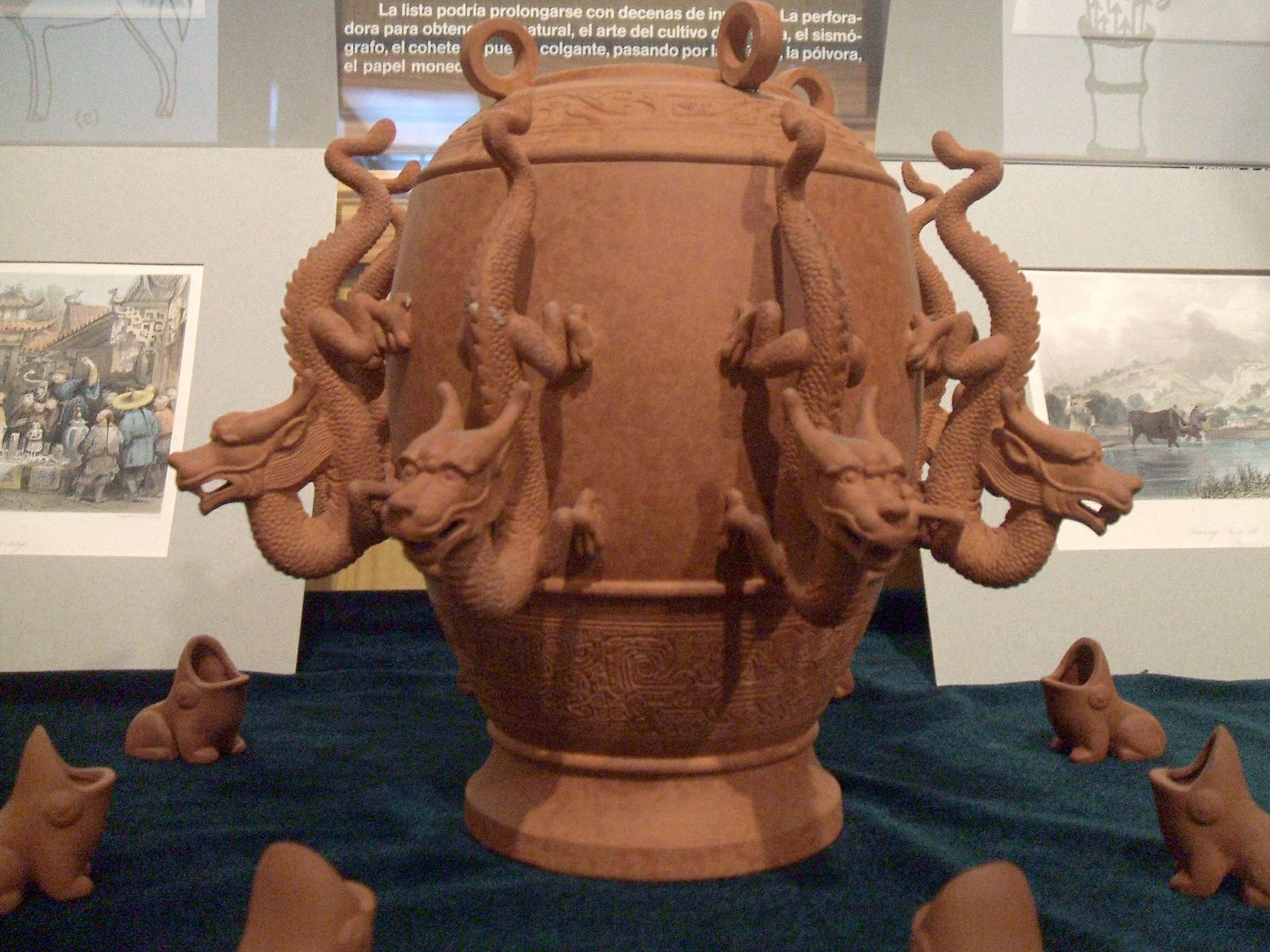
A replica of Zhang Heng's seismoscope at the Museo Oriental, Valladolid: Zarateman, CC0
A scholar of many talents
Zhang Heng was born in 78 CE in Nanyang, in what is now Henan province, and grew up to be one of the great minds of the Eastern Han dynasty. He served twice as the court's chief astronomer, mapped about 2,500 stars, built a water-powered armillary sphere to model the heavens, worked on the value of pi, and was admired as a fine poet.
China has always lived with earthquakes, and reports of them reached the capital at Luoyang slowly. Knowing where a quake had struck, and quickly, would help officials send relief. In 132 CE Zhang presented a remarkable answer to the court.
Video: The First Seismoscope (3D Animation) (ScienceWorld), embedded from YouTube.
Dragons, toads and a falling ball
According to the Book of Later Han, the instrument was a large bronze vessel shaped a little like a wine jar, about 2 meters across. Eight dragon heads faced outward around the top, one for each main compass direction, and each held a bronze ball in its mouth. Below every dragon sat a bronze toad with its mouth open.
When the ground shook, a mechanism inside released just one ball. It dropped with a clang into the toad below, telling the watchers which direction the shaking had come from. The other dragons kept their balls, so the reading was clear.
The day it proved itself
The best known story says that one day a ball dropped even though nobody in the capital had felt anything. Courtiers were doubtful. Then, days later, messengers arrived with news of an earthquake roughly 400 to 500 kilometers to the northwest, in today's Gansu province. The skeptics were silenced, and the court began recording the direction of earthquakes.
What was inside?
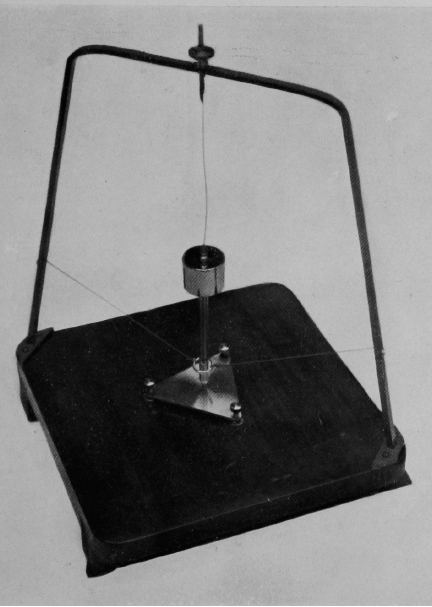
No original survives, and the ancient text only hints at the interior, describing a central column that could move along eight tracks. Most researchers think this was some kind of pendulum. In the 20th century the scholar Wang Zhenduo proposed a hanging pendulum and later an upright, inverted pendulum, and in 2005 Chinese seismologists announced a new working replica.
Exactly how one dragon, and only one, was triggered is still debated, and modern copies have not matched the sensitivity the old records describe. Strictly speaking it was a seismoscope, since it showed that a quake happened and from which direction rather than drawing a record of the waves. Even so, it stands as the earliest known instrument built to detect earthquakes from afar.
- A replica of Zhang Heng's seismoscope at the Museo Oriental, Valladolid: Zarateman, CC0
- A model of the inverted pendulum proposed for its interior: Seismological Society of Japan, Public domain
Text written by Ancient Visionary.
← Hero's Aeolipile: The First Steam EngineRoman Concrete: The Stone That Heals Itself →