Stonehenge
Moving giant stones across Britain. Stonehenge was built in stages from about 3000 BCE. Where its stones came from, how they were moved and its alignment with the solstices.
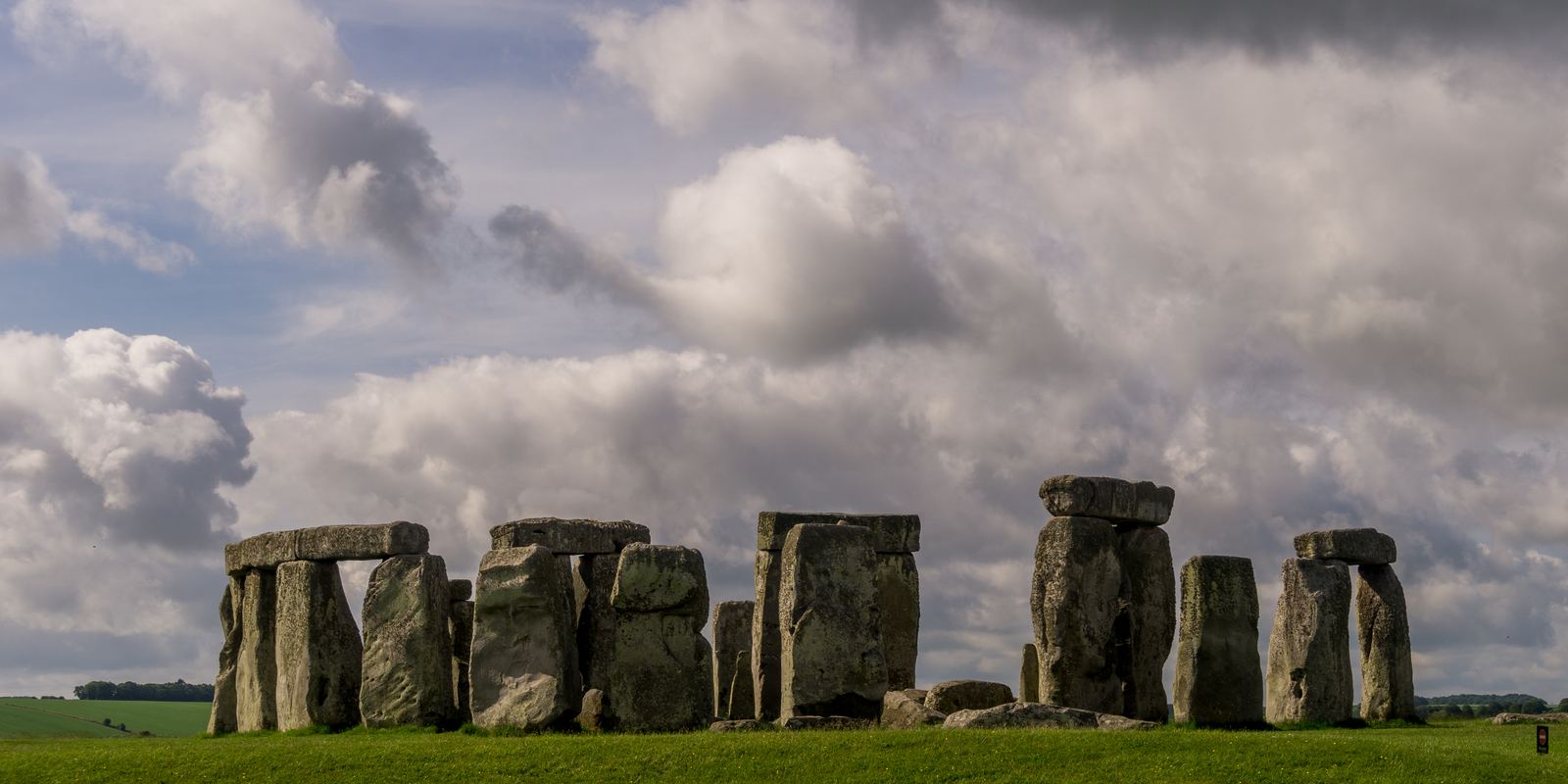
Stonehenge from the north: Sumit Surai, CC BY-SA 4.0
A monument in stages
Stonehenge, on Salisbury Plain in southern England, was built and rebuilt over more than a thousand years. It began around 3000 BCE as a circular ditch and bank, and the great stones were raised around 2500 BCE. The site was used and modified for centuries after.
Where the stones came from
The huge sarsen stones, some weighing around 25 tonnes, came from West Woods, about 25 km north, according to a 2020 chemical study. The smaller bluestones came from the Preseli Hills in Wales, about 225 km away. In 2024 researchers showed that the large Altar Stone came from northeast Scotland, more than 700 km away, a surprising discovery.
How they moved them
Without wheels or metal tools, Neolithic people probably moved stones on wooden sledges over timber rails or rollers, pulled by large teams with ropes. Experiments have shown that a few dozen people can drag multi-tonne stones this way. Raising them involved digging pits, levering the stones upright and packing them in place.
Sun alignment
The monument is aligned with the midsummer sunrise and midwinter sunset, and thousands gather there at the solstices. This shows careful observation of the sun's yearly cycle by farming communities who tracked the seasons.
Engineering lessons
Stonehenge's builders shaped the sarsens carefully, using techniques borrowed from woodworking: the horizontal lintels sit on the uprights with mortise-and-tenon joints, and neighbouring lintels lock together with tongue-and-groove joints. The lintels are even curved slightly to follow the circle. These details, worked with stone hammers, show a high level of planning and craft for a society without metal tools at the time the main circle was built.
Visiting
Stonehenge is managed by English Heritage, with a visitor centre and reconstructed Neolithic houses. Most visitors view the stones from a path around the circle; special access visits inside the circle can be booked.
- Stonehenge from the north: Sumit Surai, CC BY-SA 4.0
Text written by Ancient Visionary.